
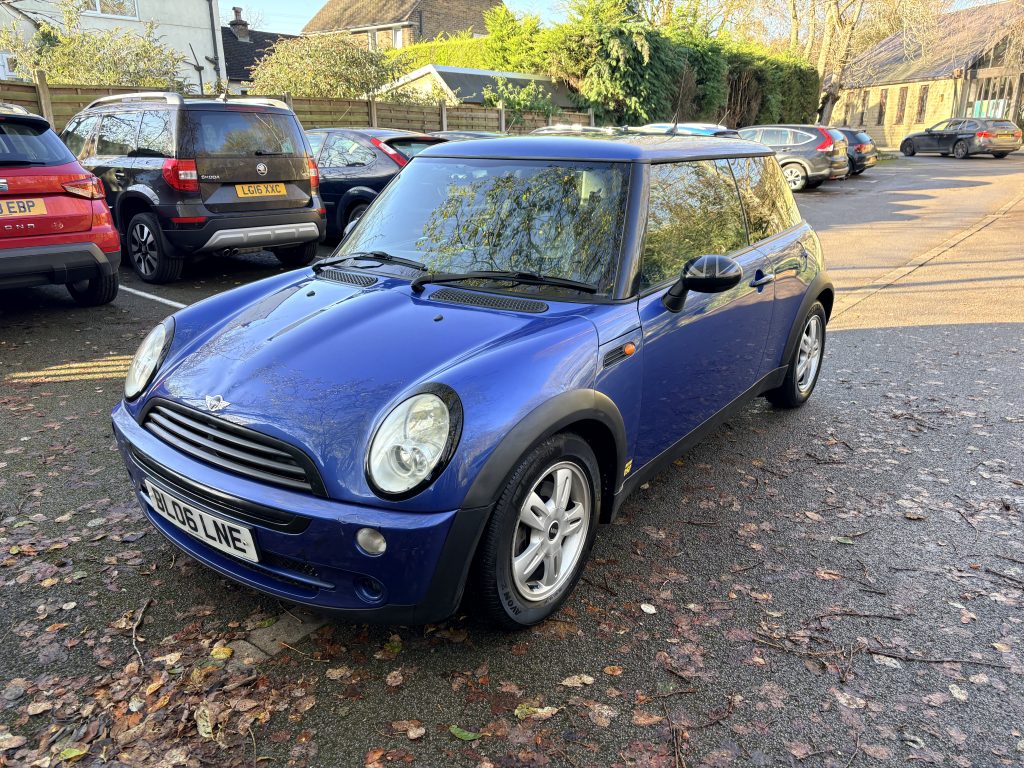
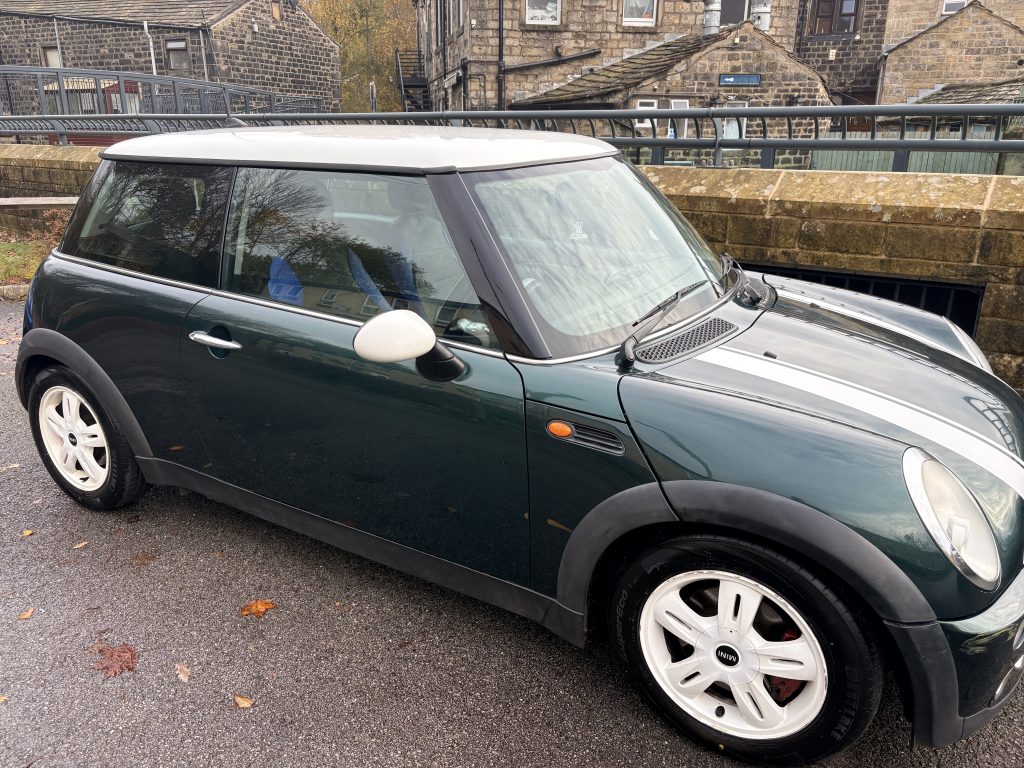
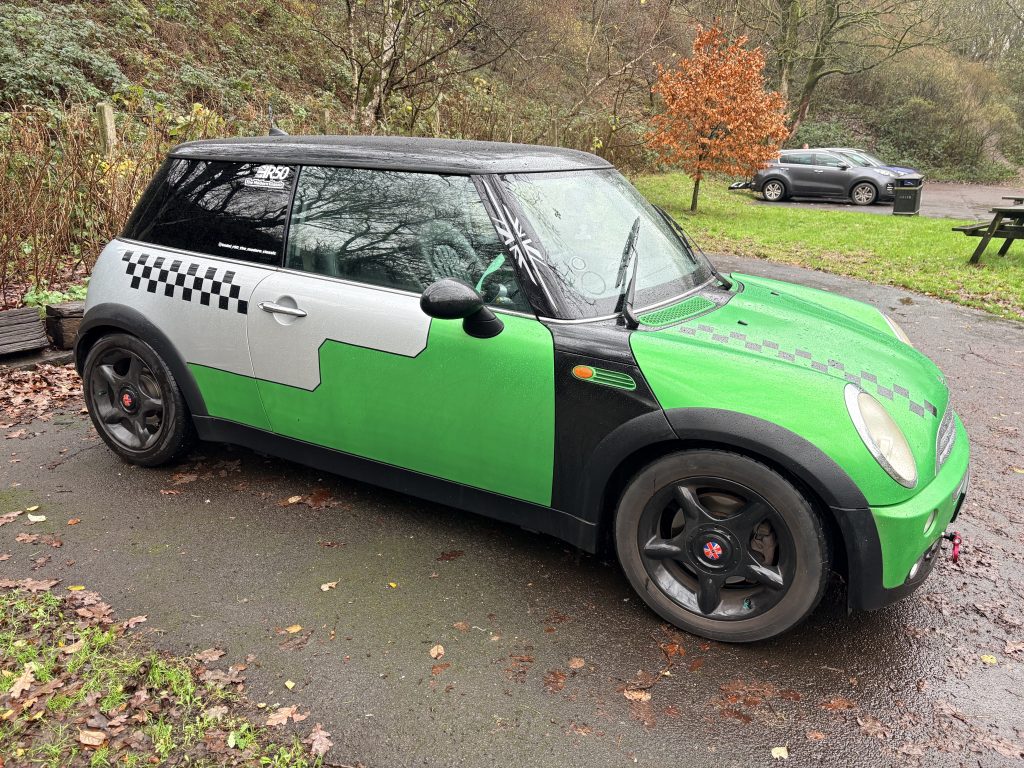
Here’s the thing about the Mini R50: it’s one of those rare cars where the numbers don’t explain the magic. On paper it’s modest. On the road it’s alive. Let’s break down why it’s such a joy to drive, how it became a modern classic, and where its future is heading. And to find our about our own Minis, just click on the links at the top of the page.
 Why the Mini R50 Is So Fun to Drive
 1. Go‑Kart Handling
The R50 was engineered with a wide track, short wheelbase, and low centre of gravity. Combine that with BMW’s chassis tuning and you get:
- Sharp turn‑in
- Flat cornering
- A playful rear end that rotates just enough to make you grin
It’s the closest thing to a go‑kart you can drive on the road without looking ridiculous.
 2. Hydraulic Steering (a dying art)
Unlike modern electric steering systems, the R50 uses hydraulic power steering, which gives:
- Real road feel
- Weight that builds naturally in corners
- A sense of connection that modern cars often lack
This alone is a huge part of its charm.
 3. BMW Engineering + Mini Character
BMW didn’t just revive the Mini name—they engineered a proper driver’s car. The R50 blends:
- German precision
- British cheekiness
- A design that feels retro without being a caricature
It’s a rare mix.
 4. Light Weight
At around 1,100 kg, the R50 is light by modern standards. That means:
- Responsive acceleration
- Nimble handling
- A sense of agility that’s disappearing from today’s heavier cars
 A Brief History of the Mini R50
 1994–2000: BMW Buys Rover, Plans a New Mini
BMW acquired Rover Group in the mid‑90s and immediately saw potential in the Mini brand. They wanted:
- A modern reinterpretation
- Safety and comfort upgrades
- A car that still felt like the original
 2001: The R50 Launches
The first “new Mini” debuted in 2001:
- R50 = Cooper
- R53 = Cooper S (supercharged)
- R52 = Convertible
It was a hit. The design was iconic, the interior quirky, and the driving dynamics were unlike anything else in the segment.
 Engine & Platform
- Built on a bespoke platform
- Engines co‑developed with Chrysler (the “Tritec” engines)
- Final assembly at Oxford, keeping the Mini’s British roots alive
 Cultural Impact
The R50 became:
- A fashion icon
- A favourite among enthusiasts
- A symbol of BMW’s successful brand revival
It also starred in The Italian Job remake, cementing its cool factor.
 The Future of the R50: A Modern Classic in the Making
The R50 is already crossing into “modern classic” territory, and here’s why its future looks bright:
 1. First of the New Minis
Collectors love “firsts”.
The R50 is the first BMW‑era Mini, making it historically significant.
2. Analogue Driving Experience
As cars become more digital, the R50’s:
- hydraulic steering
- mechanical feel
- simple interior
…become more desirable.
3. Rising Enthusiast Interest
Values for clean, low‑mileage examples are already creeping up.
The R53 Cooper S is leading the charge, but the R50 is following.
4. Affordable to Maintain (mostly)
Parts are still widely available, and the cars are simple enough for DIYers.
Yes, there are known issues (power steering pumps, CVT gearboxes, rust), but nothing that scares off enthusiasts.
5. A Future Classic With Character
The R50 has:
- charm
- personality
- a design that has aged incredibly well
It’s the kind of car people will restore, cherish, and show at future classic car meets.
 My Take
The Mini R50 is fun because it’s honest. It doesn’t try to be fast or flashy—it just wants to play. It’s the kind of car that makes even a trip to the shops feel like a back‑road blast.
And as the world moves toward EVs and digital dashboards, the R50’s analogue soul is only going to become more special.
 Common Problems to Watch For (R50 Cooper)
These aren’t deal‑breakers — just the usual Mini quirks that any owner should know.
 1. Power Steering Pump Failure
- One of the most notorious issues
- Caused by overheating and poor airflow
- Symptoms: heavy steering, whining noise
- Fix: replacement pump + cooling fan upgrade
2. CVT Gearbox (on automatic R50s)
- The CVT is the weak link
- Known for shuddering, slipping, or total failure
- Manual cars avoid this entirely
- If buying: avoid CVT unless it’s unbelievably cheap
3. Thermostat Housing Leaks
- Plastic housing cracks over time
- Cheap part, annoying job
- Keep an eye on coolant levels
4. Front Control Arm Bushes
- Wear quickly due to the car’s sharp handling
- Symptoms: vague steering, knocking
- Polybush upgrade solves it permanently
5. Rust
- Not as bad as some early 2000s cars
- But check:
- Rear arches
- Boot floor
- Sills
- Subframe mounts
6. Interior Wear
- Early Minis had soft-touch plastics that scratch easily
- Seat bolsters wear quickly
- Nothing structural — just cosmetic
 What to Modify (and What to Leave Stock)
The R50 responds beautifully to the right mods. But some things are best left untouched.
 Best Mods for Driving Feel
These transform the car without ruining its character:
 1. Polybushes (front control arms)
Sharper steering, longer life.
2. Uprated rear anti-roll bar
Makes the car rotate more eagerly — the classic Mini feel.
3. Bilstein B4 or B6 dampers
Keeps the ride comfortable but improves control.
4. Stainless cat-back exhaust
Not for power — for tone. The R50 sounds great with a subtle upgrade.
5. Intake + high-flow panel filter
Adds a bit of induction noise. Don’t expect big power gains.
 Mods to Avoid
These tend to ruin the car’s balance or reliability:
 1. Cheap coilovers
They make the car crashy and unpredictable.
2. Oversized wheels
Stick to 15″ or 16″.
17″ looks good but hurts the ride and steering feel.
3. ECU remaps promising big gains
The NA Tritec engine doesn’t respond well.
You’ll gain noise, not power.
 R50 vs R53 vs R56 — Which One Is “Best”?
Here’s the enthusiast’s comparison.
R50 Cooper (2001–2006)
Character: Pure, simple, analogue
Engine: 1.6 NA Tritec
Power: 115 bhp
Why buy:
- Lightest of the bunch
- Best steering feel
- Cheapest to run
- Most “classic Mini” personality
 R53 Cooper S (2002–2006)
Character: Hot hatch icon
Engine: Supercharged 1.6
Power: 163–210 bhp (depending on year/JCW)
Why buy:
- Supercharger whine
- Tunable
- Already a collector’s item
- Strong Getrag 6‑speed manual
R56 Cooper/Cooper S (2006–2013)
Character: More refined, more grown-up
Engine: PSA/BMW Prince engines
Power: 120–175 bhp
Why buy:
- Faster
- Better MPG
- More modern interior
BUT: - Early N14 engines suffer timing chain issues (“death rattle”)
- Less steering feel than R50/R53
The Future of the R50
Here’s where things get interesting.
1. Values Will Rise
The R53 is already climbing.
The R50 will follow because:
- It’s the first BMW Mini
- It’s analogue
- It’s simple
- It’s fun
Good, original examples will become sought after.
2. Parts Availability Will Stay Strong
BMW still supports the Mini brand heavily.
Aftermarket is huge.
No danger of parts drying up soon.
3. Enthusiast Community Is Growing
Forums, Facebook groups, YouTube channels — the R50/R53 scene is thriving.
More people are restoring them than scrapping them.
4. It Will Become a “Starter Classic”
Like the Peugeot 205, MX‑5, and Clio 172, the R50 is:
- Affordable
- Easy to work on
- Fun at any speed
Perfect for younger enthusiasts entering the classic scene.
The Best Years of the R50 (and Why)
The R50 ran from 2001 to 2006, but not all years are equal.
2004–2006: The Sweet Spot
These later cars benefit from:
- Updated interior materials
- Improved build quality
- Fewer early-production gremlins
- Better reliability on electrical systems
If someone wants the most “sorted” R50, these are the years to target.
2001–2003: Early Cars With Charm
These have:
- More “raw” steering feel
- Slightly lighter curb weight
- Quirkier interior plastics
But they also have:
- More power steering pump failures
- More electrical niggles
Collectors may eventually value early VINs, but for daily use, the later cars win.
 What to Check When Buying an R50
Here’s the checklist that separates a good Mini from a money pit.
Mechanical
- Power steering pump: Listen for whining, check for heavy steering
- Thermostat housing: Look for coolant residue around the housing
- Front control arm bushes: Excessive play or knocking
- Rear trailing arm bushes: Car feels unstable under braking
- Clutch: High bite point = worn
- Gearbox: Manual is strong; CVT should be avoided
 Suspension & Steering
- Check for uneven tyre wear
- Inspect strut tops for cracking
- Look for leaking dampers
 Bodywork
- Rear arches (inside lip)
- Boot floor around the battery well
- Sills near jacking points
- Subframe mounts
 Interior
- Pixel issues on the central speedo
- Worn seat bolsters
- Broken window regulators
Paperwork
- Regular oil changes (these engines like fresh oil)
- Coolant flush history
- Steering pump replacement (a big plus)
- Evidence of suspension refresh
 The Rarest and Most Collectible R50 Variants
Even within the R50 range, some trims are already becoming sought after.
 1. Mini One Seven / Park Lane / Checkmate (Special Editions)
These limited editions had:
- Unique colours
- Special interior trims
- Rare wheels
Collectors love factory oddities.
 2. Pepper Pack & Chili Pack Cars
These add:
- Better seats
- Fog lights
- Upgraded interior
- Better resale value
 3. Early Pre‑Production or Launch Cars
Rare, but only for hardcore collectors.
 4. Low‑Mileage, Unmodified Examples
As with any future classic, originality is king.
How to Future‑Proof an R50 for Long-Term Ownership
If you want to keep one for decades (and honestly, the R50 is worth it), here’s how to make it last.
1. Replace the Power Steering Pump proactively
A new pump + cooling fan = peace of mind.
2. Refresh the Suspension
A full refresh transforms the car:
- Dampers
- Bushes
- Top mounts
- Drop links
It will feel like new.
3. Rust Prevention
- Treat arches and sills
- Waxoyl the underside
- Keep drain holes clear
4. Cooling System Overhaul
- Thermostat housing
- Water pump
- Radiator if original
These are cheap parts that prevent expensive failures.
5. Keep It OEM+
Collectors prefer:
- Original wheels
- Original interior
- No silly mods
Tasteful upgrades (Bilsteins, polybushes, stainless exhaust) are fine.
 The Best OEM+ Upgrades for Daily Driving
These keep the Mini’s character but make it feel tighter and more modern.
1. Bilstein B4 or B6 dampers
Comfort + control.
2. Rear anti-roll bar upgrade
Transforms cornering balance.
3. Polybushed front control arms
Sharper steering, longer life.
4. Stainless exhaust
Adds tone without drone.
5. 16-inch wheels
The perfect balance of looks and ride quality.
 Final Thoughts and the Best Add On!
The R50 is one of those cars that rewards the owner who cares. It’s simple, mechanical, and full of personality — the kind of car that will absolutely become a cherished modern classic.
You’re already ahead of the curve by taking an interest now. So let’s delve deeper into one of the absolute best factory add-ons of the R50s, The Cockpit Chrono Pack!